
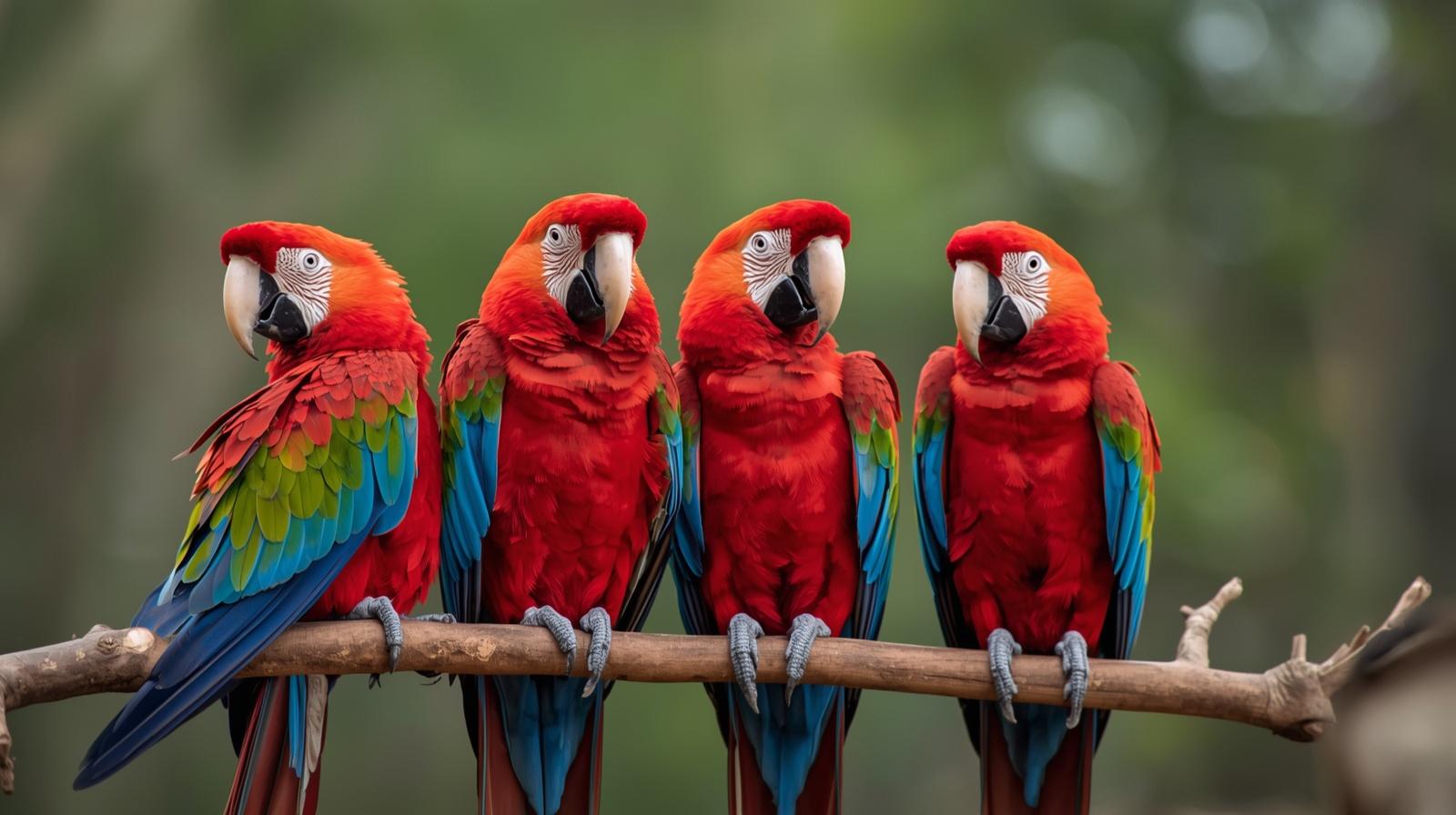
People often think the birds are stupid, yet parrots completely overturn this stereotype. They are not only capable of learning sounds but can also reproduce human speech with striking clarity, surprising us when a casual “hello” or “good morning” suddenly comes from a beak instead of a mouth.
Many animals demonstrate intelligence—dogs can follow commands, cats can recognize their names—but only a handful of bird species, most notably parrots, can actually “speak” in human language. This ability is far more than simple mimicry or a tape‑recorder‑like repetition; it represents an evolutionary marvel that fuses specialized physical adaptations with advanced social intelligence.
The syrinx is an exceptionally specialized organ in parrots, located at the base where the trachea branches. Unlike the human vocal cords, the syrinx is far more flexible, capable of controlling airflow on both sides simultaneously. This means that when parrots produce sounds, they can adjust pitch and timbre with precision, and even generate two distinct tones at once—like a “dual‑channel instrument.”
The walls of the syrinx are lined with delicate muscles and membranes. These muscles can contract or relax rapidly, altering the vibration of the airflow in an instant. As a result, parrots are able to reproduce subtle features of human speech, such as intonation, rhythm, and even laughter or environmental noises. The complexity of the syrinx gives them vocal abilities that surpass most other birds.
Equally important is the parrot’s tongue, which plays an indispensable role in their ability to “speak.” Unlike many birds, parrots have tongues that are relatively thick, highly flexible, and capable of fine coordination with beak movements to shape sound. The tongue’s surface is covered with sensitive nerve endings, allowing it to detect minute changes in airflow and resonance. This sensitivity enables parrots to articulate syllables with clarity when imitating human speech.
The tongue’s structure is also distinctive: not only flexible, but muscular enough to act like a small “tuning device,” altering the resonance within the oral cavity. When parrots mimic different sounds, the tongue works in concert with the upper and lower beak to adjust the passage of air, producing tones that closely resemble human speech. This dexterous use of the tongue is one of the key reasons parrots can convincingly mimic greetings, laughter, and other vocal expressions.
The structure of a parrot’s brain is markedly more complex than that of most other birds. While the brains of ordinary birds can handle vocalizations and basic social behaviors, parrots exhibit a clearer division of labor when it comes to sound learning and social interaction. Their brains contain a central region dedicated to storing and recalling vocal patterns, as well as an outer layer that enables flexible adjustment and reproduction of those sounds. This “core plus shell” design allows parrots to mimic with a precision and variety far beyond that of other species.
Compared with other birds, the outer shell of the parrot’s brain is especially well developed. This gives them the ability to deploy sounds in social contexts with remarkable adaptability, rather than simply repeating them. Crows or starlings may also imitate noises, but their neural circuits are relatively simple, and their mimicry tends to be brief or limited. Parrots, by contrast, can recombine fragments of sound and even select appropriate phrases during interaction. This distinction explains why parrots can “speak” in ways that resemble human language, whereas most birds can only call.
The parrot’s brain is not only more intricate than that of typical birds but also demonstrates a high degree of flexibility and social intelligence. This unique neural architecture makes parrots one of the rare creatures capable of crossing the boundary of species-specific communication, positioning them as extraordinary figures in the animal kingdom’s study of language.
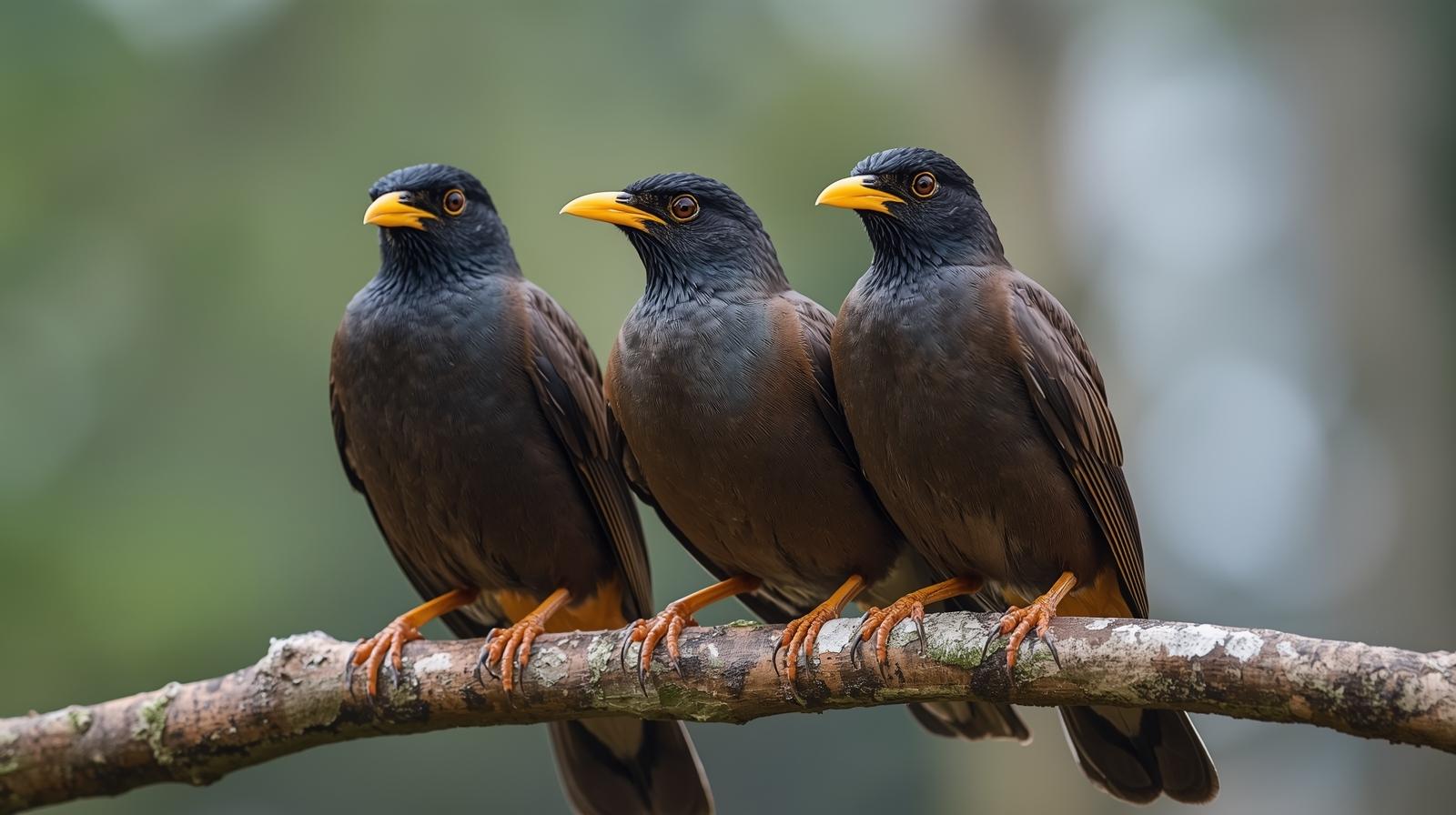 Chinese starling
In the wild, parrots live in flocks across forests and grasslands, and their vocalizations serve practical purposes such as communication, warning of danger, or attracting mates. Their mimicry in natural settings is often directed toward other birds or environmental sounds, helping them blend into the group or enhance survival. The “sound library” of wild parrots typically consists of natural elements—companions’ calls, predator alarms, or even the rush of water and wind. Their imitations are functional, closely tied to social cohesion and survival.
In human care, however, parrots’ mimicry takes on a different character. Constant exposure to human voices leads them to incorporate words, laughter, and even household noises into their repertoire. These imitations are no longer essential for survival but instead serve as a form of interaction. Parrots use mimicry to capture their owner’s attention, build emotional bonds, and even simulate participation in conversation. Because they lack the natural flock dynamics of the wild, captive parrots often treat humans as their primary social partners.
When subjected to deliberate training, parrots’ linguistic mimicry can reach astonishing levels. In natural conditions, they might only repeat a syllable or two sporadically, but with consistent interaction and repeated teaching, they gradually build a vocabulary and can reproduce entire short phrases. Training usually involves fixed verbal cues—such as repeating “hello” or “good morning” in the same context each day—so the parrot associates the sound with the situation and uses it more reliably.
More refined training can even foster “selective mimicry.” Parrots not only retain a larger vocabulary but also learn to deploy specific phrases in appropriate contexts—for instance, greeting someone with “hello” when they approach, or saying “goodbye” when the owner leaves. This demonstrates that their mimicry is not mere repetition but carries a degree of comprehension and social intent.
In 1976, American animal psychologist Dr. Irene Pepperberg purchased an African Grey parrot from a pet store and named him Alex. What began as a simple acquisition turned into a thirty‑year program of training and research. Over the decades, Alex demonstrated remarkable intelligence and comprehension, as well as the ability to express emotions. He could distinguish between different objects, colors, and shapes, and even describe items using appropriate adjectives.
Alex also learned to communicate his desires to humans. He could indicate when he wanted to go somewhere or obtain a particular item, and if he was taken to the wrong place or given something he did not want, he would show displeasure—sometimes even throwing the object back at the researcher. At times, he refused to cooperate out of boredom, deliberately giving incorrect answers. These behaviors astonished the scientific community, which had long assumed that birds, with their relatively small brains, were incapable of such advanced intelligence.
Before Alex, it was widely believed that only large primates possessed the capacity for language and reasoning. His achievements overturned this assumption, proving that birds could also exhibit high‑level cognition. His contributions are now regarded as a milestone in animal cognition research, standing alongside studies of dolphins and gorillas in the exploration of non‑human communication.
On the evening of September 6, 2007, after finishing her day’s work, Dr. Pepperberg said goodnight to Alex as she always did. He responded with his familiar phrase: “You be good. I love you. See you tomorrow.” The next morning, Alex was found dead in his cage from heart‑related complications at the age of thirty‑one. His final words have often been interpreted as a genuine expression of affection, symbolizing the intersection of science and human emotion.
Alex is remembered as one of the most intelligent parrots ever studied. He demonstrated comprehension, expressive ability, logical reasoning, and even grasped certain abstract concepts. His vocabulary reached around one hundred words, an extraordinary feat that continues to inspire both scientists and the public.
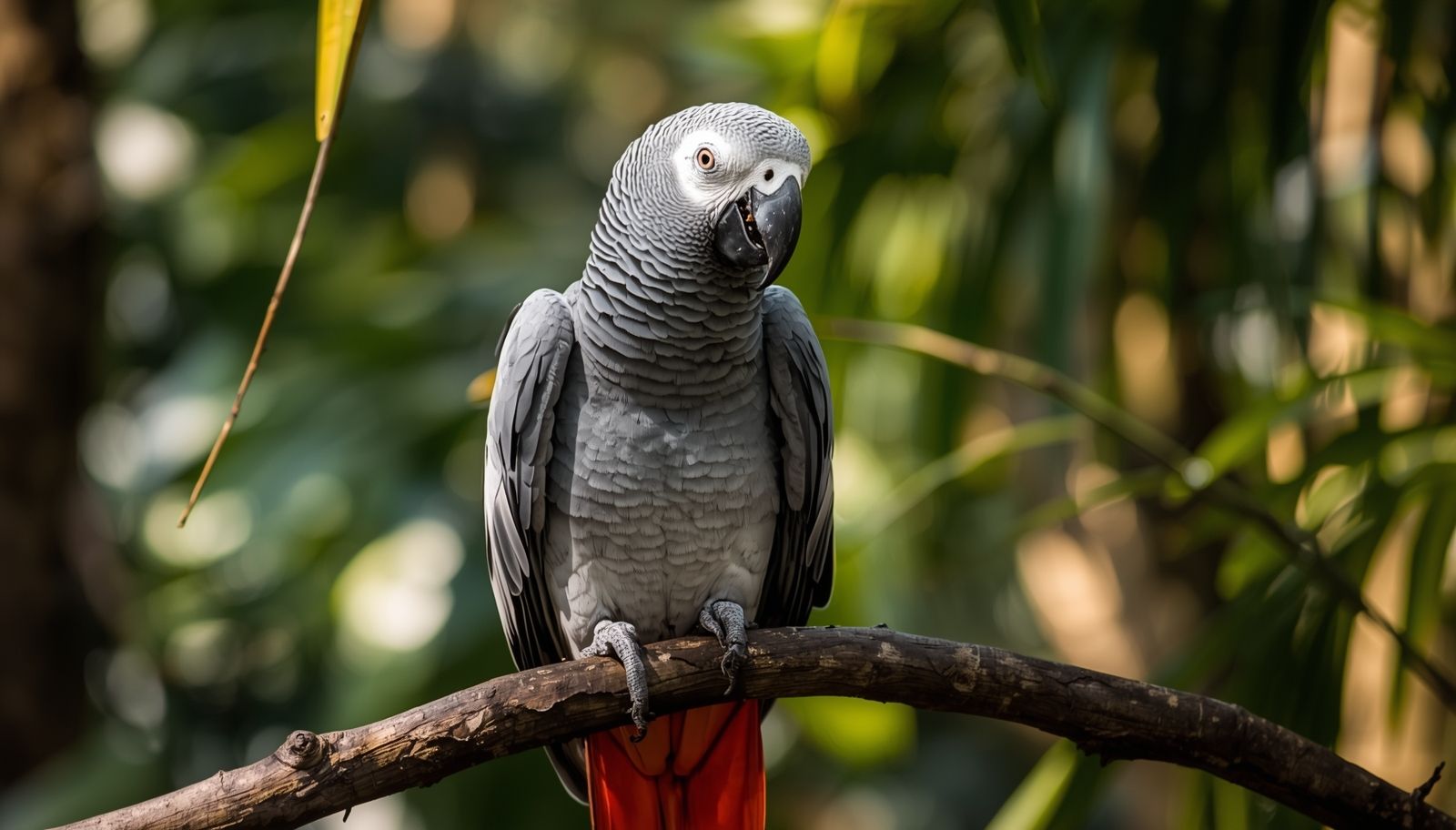 African grey parrot
We leverage big data to bring you the most fascinating and mind-blowing trivia. Follow us for regular updates—prepare to be amazed while leveling up your knowledge.



Tattooing has been recorded since ancient times, often serving religious purposes, marking identity, or functioning as punishment. In more recent history, tattoos were also regarded as symbols of

For many people, losing weight feels like a lifelong mission. In today’s world of abundance, food shortages are no longer a concern. Instead, overnutrition has led to widespread obesity. ###

We often forget different things, but many of them are ones we’d rather remember—especially when studying or learning, where newly acquired knowledge seems to slip away quickly. How does the human

When taking antibiotics, patients are often instructed to complete the full course in order to reduce the risk of bacteria developing resistance. But why do bacteria become resistant, and what

What culture and thought did the Renaissance truly aim to revive? Why did the course of history bring about the necessity of such a “rebirth”? And what form did human society take during the Middle
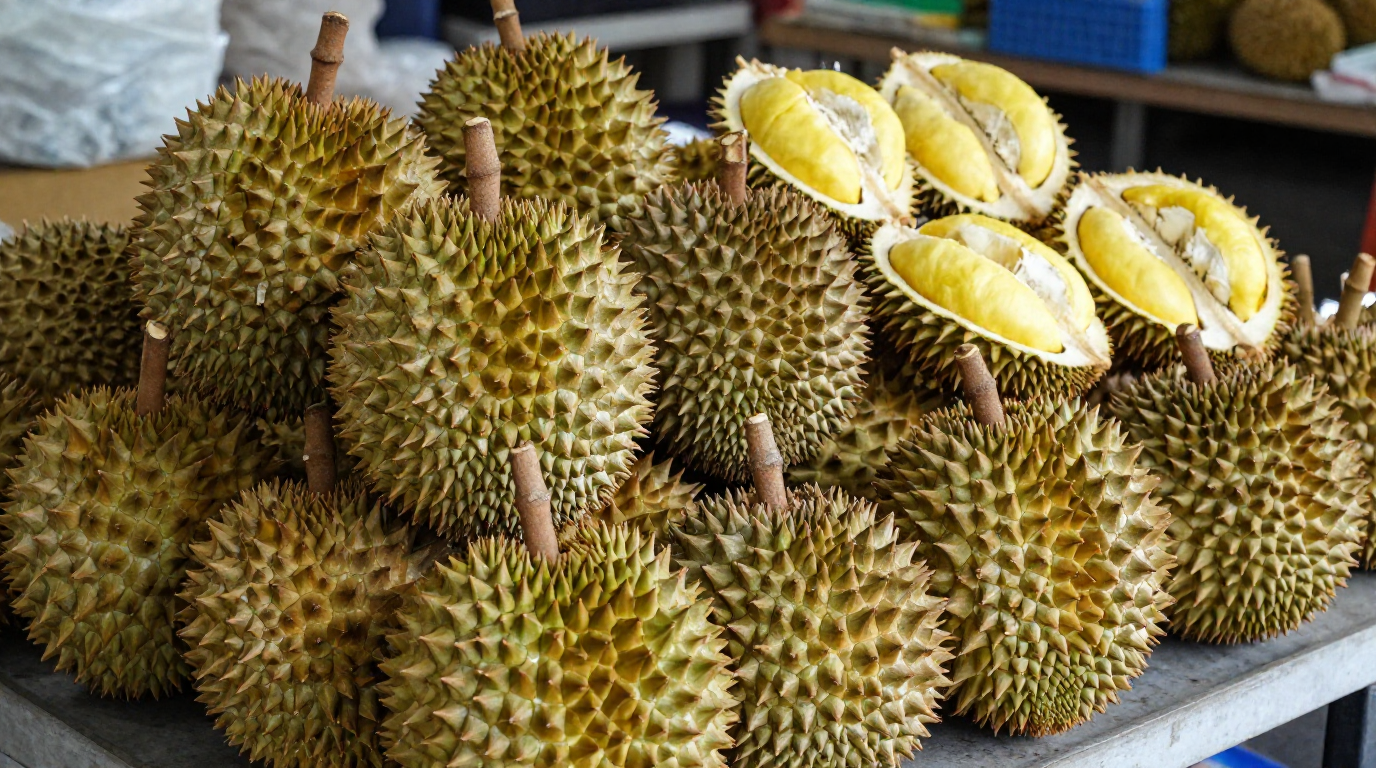
Durian, hailed as the “King of Fruits,” is renowned for its thick, spiky shell and its powerful aroma. Its appearance serves both as a natural defense and a sign of ripeness, while its distinctive
Stepping into the tropical rainforest, people are often astonished by the sheer size of its creatures: beetles as thick as a thumb, butterflies with wings as wide as a hand, and even frogs and ants

In human society, the most immediate differences often arise from appearance. Walking down the street or browsing through historical images, we find that human looks display astonishing diversity.


Follow us for quirky updates, fun discoveries, and a front‑row seat to the weird and wonderful world we live in.