
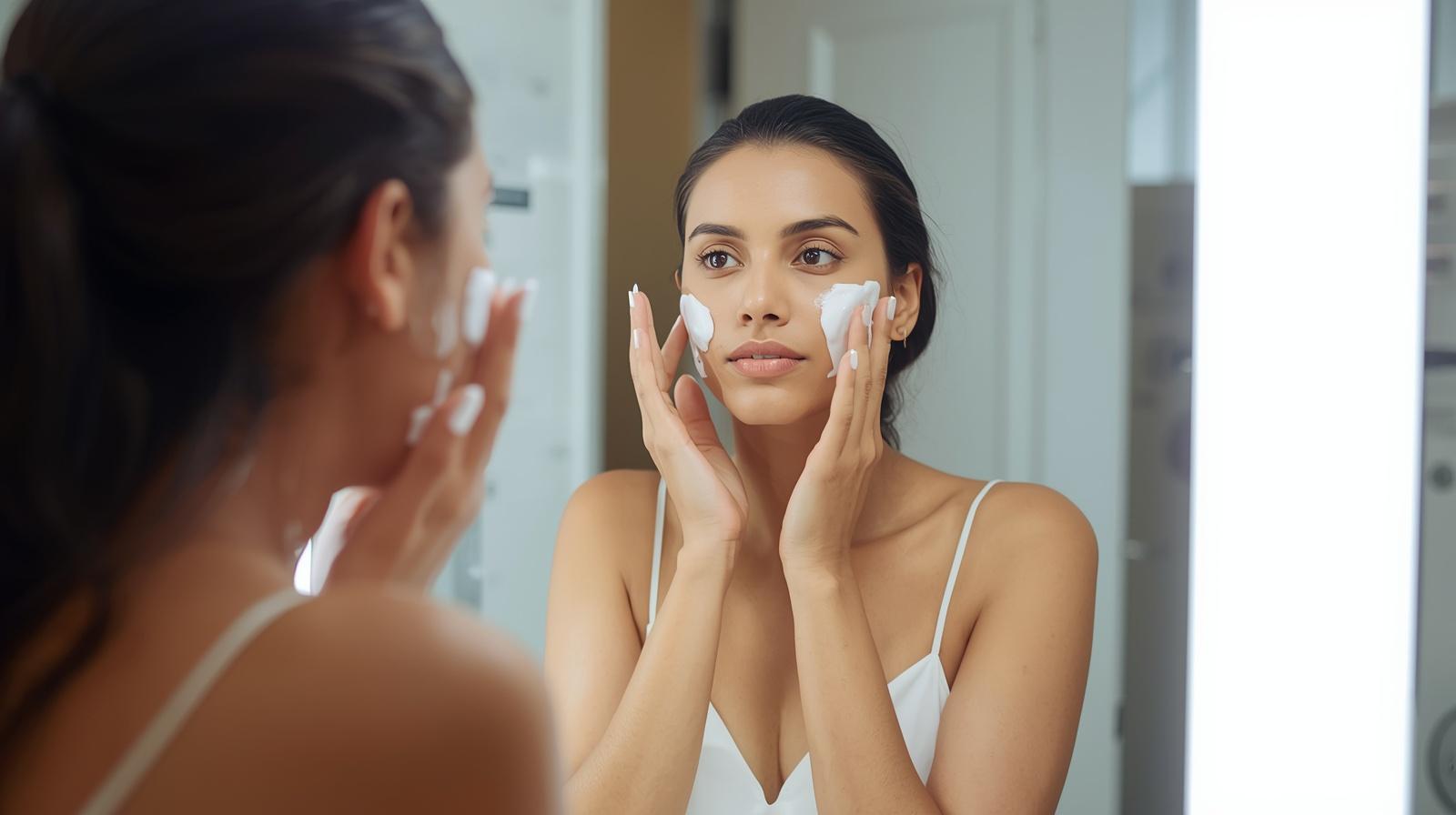
In daily facial care, many skincare brands and beauticians often emphasize the need for regular exfoliation. But what exactly are we removing when we exfoliate? Is it truly necessary? And what happens if we don’t exfoliate?
Our skin’s epidermis is composed of multiple layers, from the outermost stratum corneum to the innermost basal layer. In the basal layer, cells continuously divide, producing new cells that gradually move outward until they reach the stratum corneum, where they naturally shed. This cycle repeats itself roughly every 28 days, though the duration can vary depending on age, metabolic rate, lifestyle, and stress. Through this renewal process, the skin constantly repairs itself—fading pigmentation, maintaining firmness, and helping to reduce the appearance of scars
When skin cells reach the stratum corneum, they naturally die and shed, forming microscopic dust. Every day, countless cells are metabolized and shed. However, with modern lifestyles—busy schedules, poor habits, high stress, and irregular routines—dead cells often fail to shed as efficiently as they should. Instead, they accumulate on the skin’s surface. When the stratum corneum becomes too thick, several problems can arise:
It is important to remember that the stratum corneum itself has powerful functions. It protects the skin from external irritation, blocks pollutants, defends against UV radiation, prevents bacterial invasion, and helps maintain moisture. If exfoliation is done incorrectly or excessively, these protective functions can be weakened or lost, leading to skin problems and even issues beyond the skin. Different ages and skin types require varying levels and frequencies of exfoliation. For most people, it is difficult to judge the right balance. Too little exfoliation may fail to remove aging cells effectively, while too much can damage the skin—resulting in more harm than benefit.
In recent years, many dermatologists and skincare experts have advised against self-exfoliation. Instead, they emphasize focusing on overall health: cultivating good lifestyle and sleep habits, keeping the skin clean and moisturized, and allowing the skin to restore its natural balance. When the skin is healthy, it can shed old cells on its own without external assistance. For those with dry or sensitive skin, self-exfoliation can be especially risky and may cause damage. A healthy stratum corneum naturally removes dead cells, and does not require outside support. Even when age or other factors slow down this process, exfoliation should be regarded only as a supplementary measure—an aid to the skin’s natural metabolism, not a replacement for it.
We leverage big data to bring you the most fascinating and mind-blowing trivia. Follow us for regular updates—prepare to be amazed while leveling up your knowledge.



People often think the birds are stupid, yet parrots completely overturn this stereotype. They are not only capable of learning sounds but can also reproduce human speech with striking clarity,

Many people have experienced hiccups — those sudden spasms that make us feel uncomfortable. If they occur at the wrong time, hiccups can be quite embarrassing. So why exactly do we hiccup? Does

Tattooing has been recorded since ancient times, often serving religious purposes, marking identity, or functioning as punishment. In more recent history, tattoos were also regarded as symbols of

The discovery and application of electricity shocked the world and accelerated the development of human civilization. What exactly is electricity, where does it come from, and how does power

Across the world, vinegar comes in many varieties and flavors, stimulating the human palate. Yet vinegar often develops sediment on its own—sometimes appearing as threads, umbrella-like shapes, or

Cars are the daily means of transport for many people, and during a journey it is inevitable to encounter sudden situations that require braking. But what actually happens when a car brakes abruptly

In human society, the most immediate differences often arise from appearance. Walking down the street or browsing through historical images, we find that human looks display astonishing diversity.

In human appearance, hair is often the most striking feature. It not only shapes our image but also carries cultural and aesthetic significance. Yet not everyone can maintain a full head of hair over



Follow us for quirky updates, fun discoveries, and a front‑row seat to the weird and wonderful world we live in.