
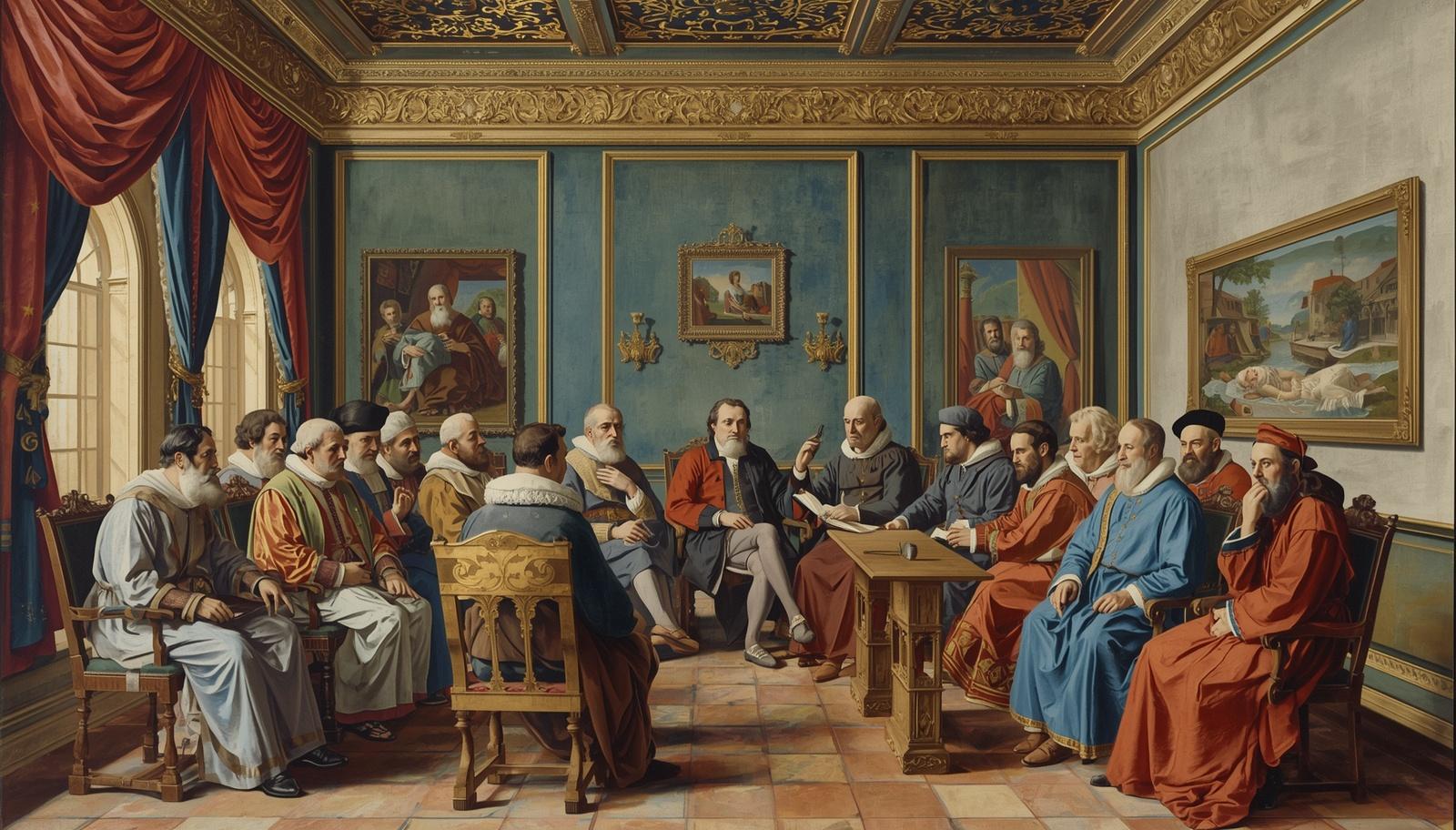
What culture and thought did the Renaissance truly aim to revive? Why did the course of history bring about the necessity of such a “rebirth”? And what form did human society take during the Middle Ages before the Renaissance?
The Middle Ages, spanning roughly from the 5th to the 14th century, was a long era in European history. The Middle Ages can be divided into early, high, and late phases, each with its own traits and significant events.
In the early Middle Ages (5th–10th centuries), Europe had just lost the support of the Western Roman Empire, and social order fell into chaos. Feudalism gradually took shape, with land as the foundation of power. Lords and nobles controlled estates, while peasants worked under them in exchange for protection. This was a time of rebuilding order. The Christian Church expanded rapidly, monasteries preserved classical texts and provided education, and religion permeated every aspect of life.
By the high Middle Ages (11th–13th centuries), society had stabilized. Advances in agriculture led to population growth, and cities began to flourish. The Crusades became defining events, not only as religious wars but also as catalysts for East–West exchange and trade. Universities arose, scholastic philosophy sought to reconcile faith with reason, and Gothic cathedrals soared skyward, symbolizing both religious power and artistic innovation. This was an era of religious and cultural vibrancy, with life increasingly diversified between rural and urban settings.
In the late Middle Ages (14th century), Europe faced a series of profound crises that shook existing structures and compelled thinkers to reconsider human life and values.
The most devastating was the Black Death. Within a few decades, the plague claimed much of Europe’s population, leaving villages abandoned and labor forces depleted, destabilizing society. People began to question the authority of religion, as the Church could neither explain nor halt the catastrophe. This crisis of faith gradually shifted attention toward human reason and capability.
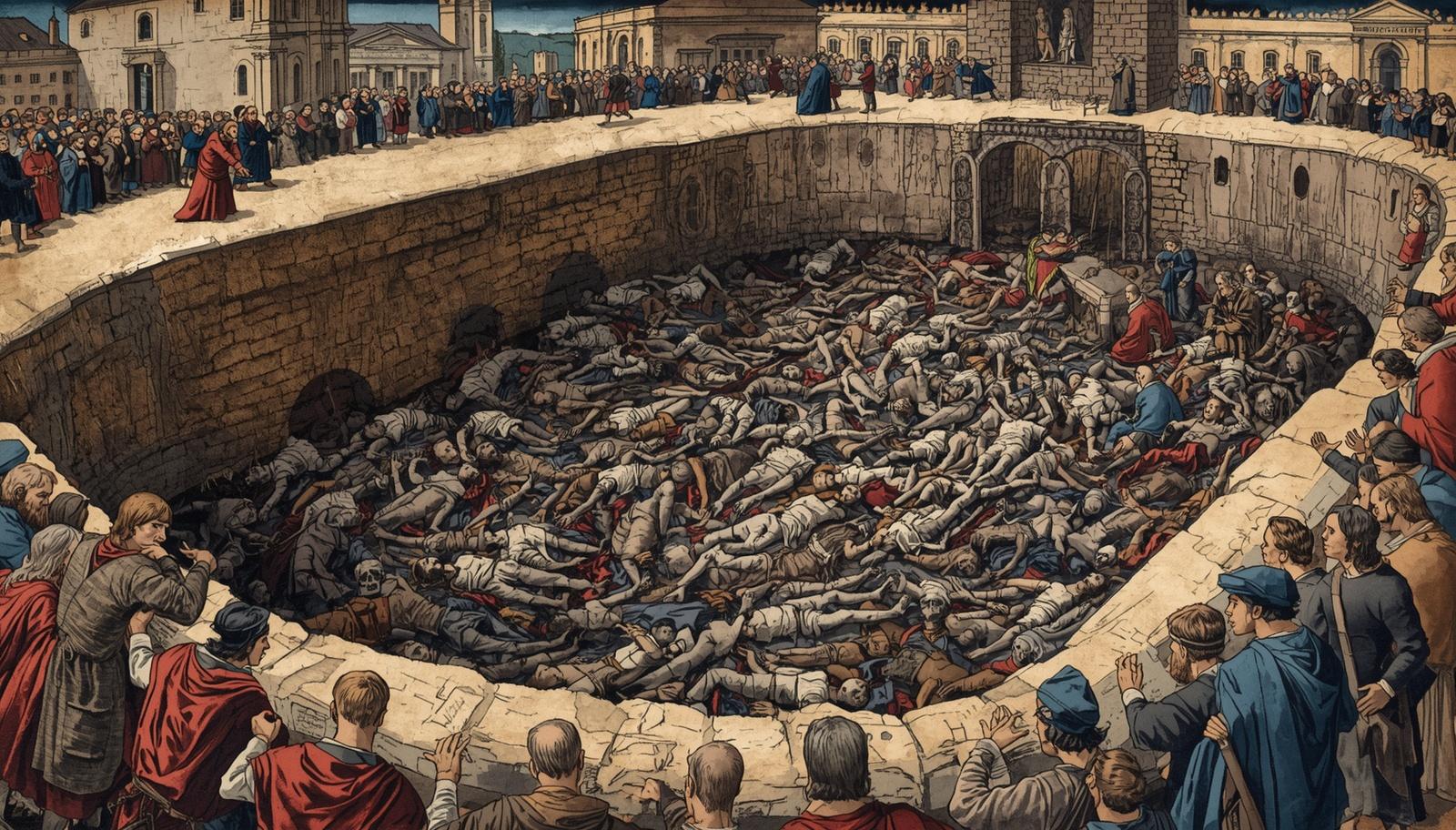 The Black Death in the late Middle Ages inflicted profound and devastating blows upon European society and human civilization
At the same time, the authority of the Church weakened further. Schisms, corruption, and power struggles eroded its role as an unquestioned spiritual anchor. Knowledge and thought began to break free from theological confines, as scholars sought new frameworks. The philosophies, sciences, and arts of ancient Greece and Rome were rediscovered, becoming fresh sources of intellectual inspiration.
Economically and socially, the rigidity of feudalism contrasted sharply with the rise of urban commerce. Peasants resisted heavy burdens, while townspeople pursued freer ways of life. These changes propelled society toward new directions.
Together, these crises and reflections ultimately ushered in the Renaissance. It was not merely an artistic revival but a comprehensive transformation of thought and culture. People reexamined humanity’s place in the world, shifting from a God-centered to a human-centered perspective. Artists pursued realism and naturalism, scientists relied on observation and experiment to uncover cosmic laws, and writers expressed human emotion and reason in vernacular languages. Knowledge ceased to be a mere servant of religion and became a tool for humanity’s own understanding of the world.
After the Renaissance, Europe gradually entered the path of modern civilization. This cultural rebirth went beyond artistic and literary prosperity; it fundamentally altered humanity’s way of understanding the world. People came to believe that reason and experience could reveal the laws of nature, directly leading to the Scientific Revolution, with breakthroughs in astronomy, physics, and medicine. Knowledge became an independent pursuit rather than a theological appendage.
As humanism matured, its influence extended into society and politics. Humanists emphasized dignity and freedom, ideas that in the 17th and 18th centuries evolved into the Enlightenment. Enlightenment thinkers argued that reason should underpin governance, advocating liberty, equality, and human rights, while challenging traditional authority. These ideas drove institutional reforms and shaped modern democracy and republicanism.
In the modern era, scientific methods and rational spirit permeated industry and technology, sparking the Industrial Revolution, which transformed production and social structures. Enlightenment ideals fostered constitutional and democratic systems, while culturally they promoted education and intellectual freedom. Together, these forces forged the modern world we inhabit today—a civilization grounded in science, reason, freedom, and human rights.
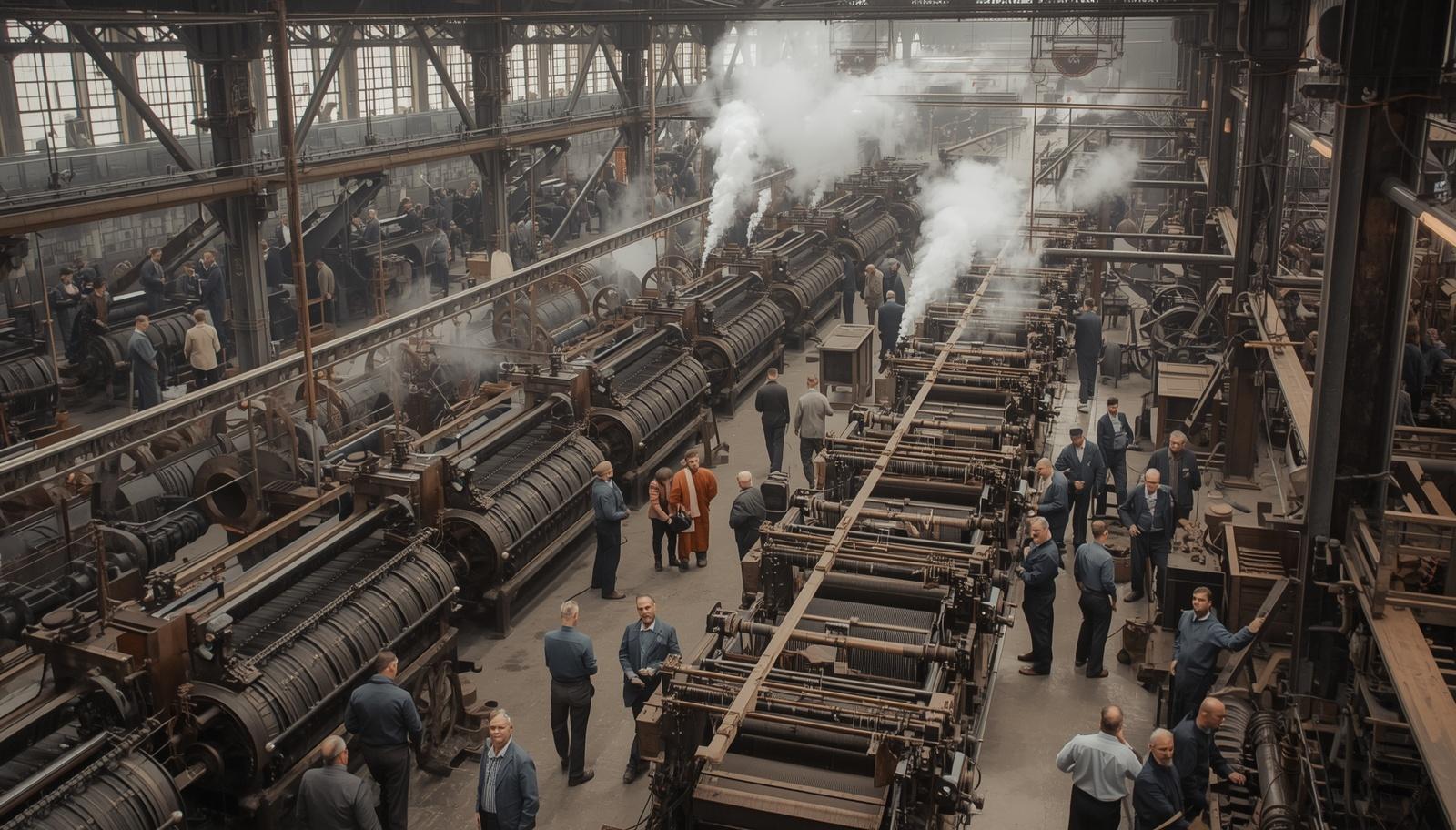 The Rise of the Industrial Revolution
We leverage big data to bring you the most fascinating and mind-blowing trivia. Follow us for regular updates—prepare to be amazed while leveling up your knowledge.



Honey is a highly nutritious natural food, yet its formation process is often misunderstood. Some people describe honey as “bee vomit,” a phrase that arises from the fact that bees repeatedly

The motor is one of the most important tools of human civilization, contributing greatly to the functioning of society. Electric fans, subways, electric cars, elevators—the examples are countless.

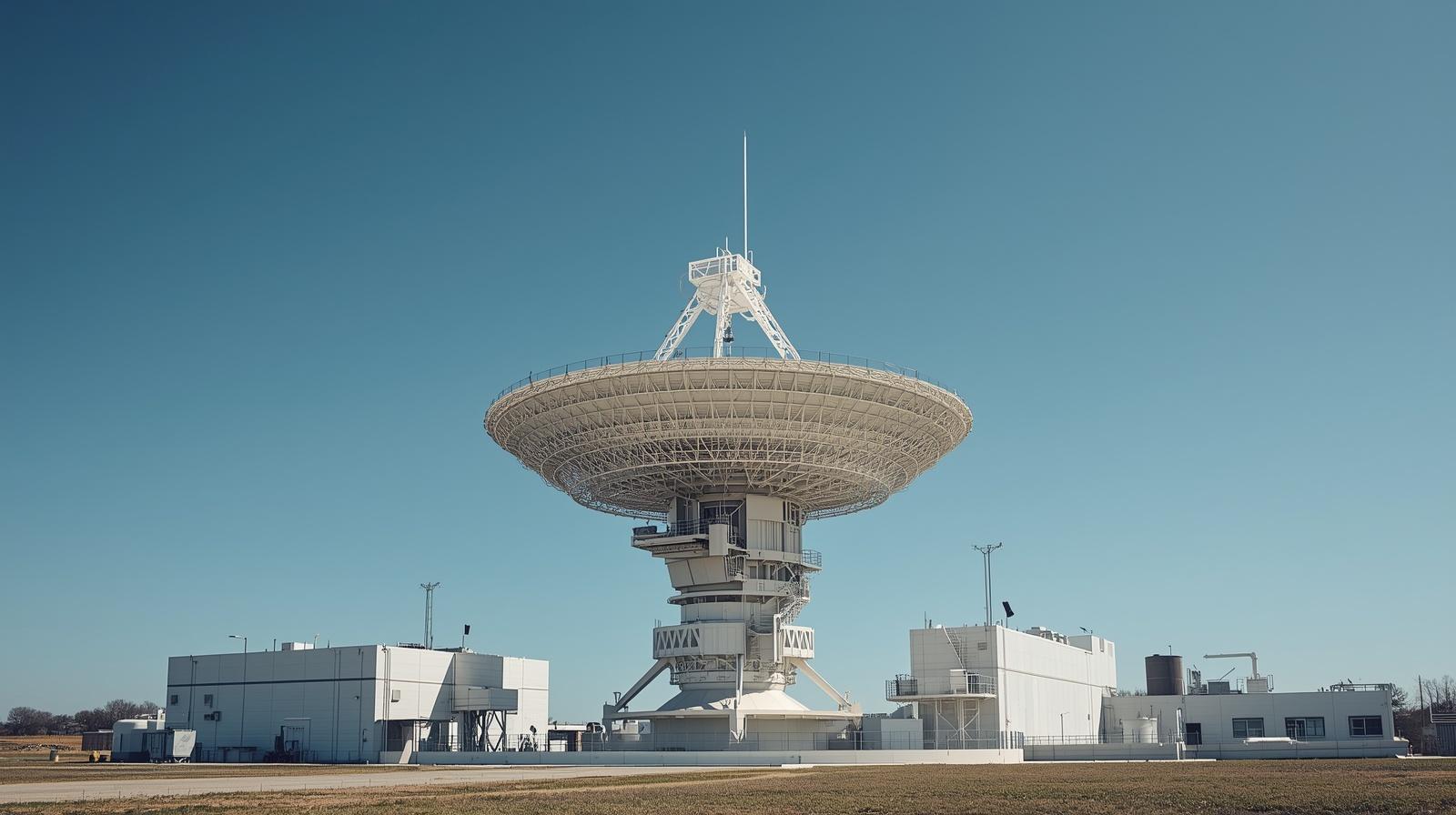
Radar has an exceptionally wide range of applications, capable of accurately determining an object’s position, distance, and speed. Its effectiveness becomes especially evident in conditions of low
Cancer is often called humanity’s leading killer, a disease that strikes fear because of its profound impact on life. A diagnosis can turn a person’s world upside down, and in severe cases, it can be

Whether at a dinner gathering with friends or chatting freely at a bar, alcohol often seems inseparable from social life. Yet we often notice a phenomenon: after a couple of drinks, some people’s

“Cocktail therapy” is currently regarded as one of the most effective treatments for HIV/AIDS. Its core principle is the simultaneous use of multiple types of antiretroviral drugs in combination to

Magnetic Levitation (Maglev) trains are famous for their high speed, but how can such heavy trains float? And why do they need to float at all? A maglev train is a high-speed transport system that

Christianity, Catholicism, Orthodoxy and Protestantism Christianity is a faith centered on Jesus Christ, emphasizing salvation and the relationship with God. It is also one of the religions with

Follow us for quirky updates, fun discoveries, and a front‑row seat to the weird and wonderful world we live in.